360 Blogs page

alt

Bringing together diverse perspectives about social good.

What do Canadians think of charities and nonprofits?
Let's Imagine podcast banner

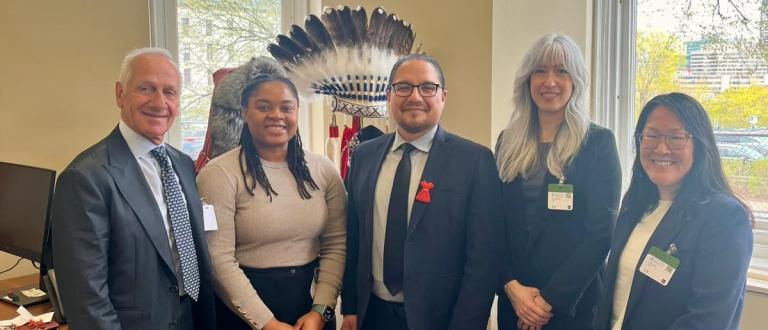
Let's Imagine Podcast EPISODE 41: Innovative community partnerships for northern education (with Willa Black and Paul Boucher)

In this episode of Let's Imagine, host Bruce MacDonald is joined by Willa Black, who founded the program while at Cisco and now serves as Volunteer Chair of Connected North's Advisory Board, and Paul Boucher, a member of the Rocher River people, residential school survivor, Knowledge and Language Keeper, and Language and Cultural Specialist at Paul William Kaeser High School in Fort Smith, Northwest Territories.

Focused multiracial women with tablet in workshop

Strengthening Your Nonprofit’s Financial Foundation. Part 3: Investment Readiness and Access to Capital

As organizations integrate earned revenue into their financial models, the question of capital often arises. Growth requires investment. Infrastructure, staffing, and systems all carry costs, and expanding what works can demand resources beyond what grants and donations alone can provide. In part 3 of this series, we’ll explore how capital can support growth once a model is proven.

Stephanie Jacobs (Guest Author)

Let's Imagine podcast banner

Let's Imagine Podcast EPISODE 40: The state of the economy and what business transformation means for Canada’s nonprofit sector (with Candace Laing)

In this episode of Let’s Imagine, host Bruce MacDonald is joined by Candace Laing, President and CEO of the Canadian Chamber of Commerce, to explore the current state of the Canadian economy, how companies are rethinking community investment and social impact, and what these shifts may mean for nonprofit organizations.

Let's Imagine podcast banner

Let's Imagine Podcast EPISODE 39: Workplaces Were Not Built for Mothers (with Allison Venditti)

In this episode of Let’s Imagine, host Bruce MacDonald is joined by Allison Venditti, Founder and CEO of Moms at Work, Canada’s largest community for working mothers and a leading voice on pay equity, caregiving, and workplace transformation. Together, they discuss how nonprofits can take meaningful action on pay transparency & redesign pathways to leadership for mothers.

Overhead view of a person working on a laptop showing stock market charts, with a calculator, coffee, phone, and printed charts on a wooden desk.

Strengthening your nonprofit’s financial foundation. Part 2: Earned Revenue – From Idea to Action

Once your organization can imagine what is possible, a practical question follows: How do you move toward integrating earned revenue, while mitigating risks and staying true to mission? This post focuses on how nonprofits can test earned revenue ideas thoughtfully and responsibly, before investing significant time, money, or organizational capacity.

Stephanie Jacobs (Guest Author)

Let's Imagine podcast banner

Let's Imagine Podcast EPISODE 38: Celebrating Black Changemakers: Leadership, Culture & Community Care (with Nathan Hall)

In this episode of Let’s Imagine, host Bruce MacDonald is joined by Nathan Hall, CEO of Culture Check, an organization dedicated to helping workplaces confront racism, strengthen psychological safety, and create environments where Black, racialized, and marginalized employees can thrive.

Subscribe to the Imagine 360° Newsletter


Stay up-to-date about the latest news, research, events, and opinions across the sector. Unsubscribe at any time through the link in the newsletter footer.


Imagine Canada, 2 St. Clair Avenue East, Suite 300, Toronto, ON M4T 2T5, [email protected]

Let's Imagine podcast banner
Related blog post

Let's Imagine Podcast EPISODE 44: Breaking the Cycle - Education, Equity, and Back-to-School (with Owen Charters)

In this episode, host Bruce MacDonald is joined by Owen Charters, President and CEO of Pathways to Education Canada. Together, they explore why wrapping students in integrated support works where piecemeal approaches fall short; how Pathways earns trust in communities with complicated relationships to institutions; and how they help position the students to be "job-ready" in a digitally powered, AI-enabled economy.